Your
Appointment
Fees and Inclusions
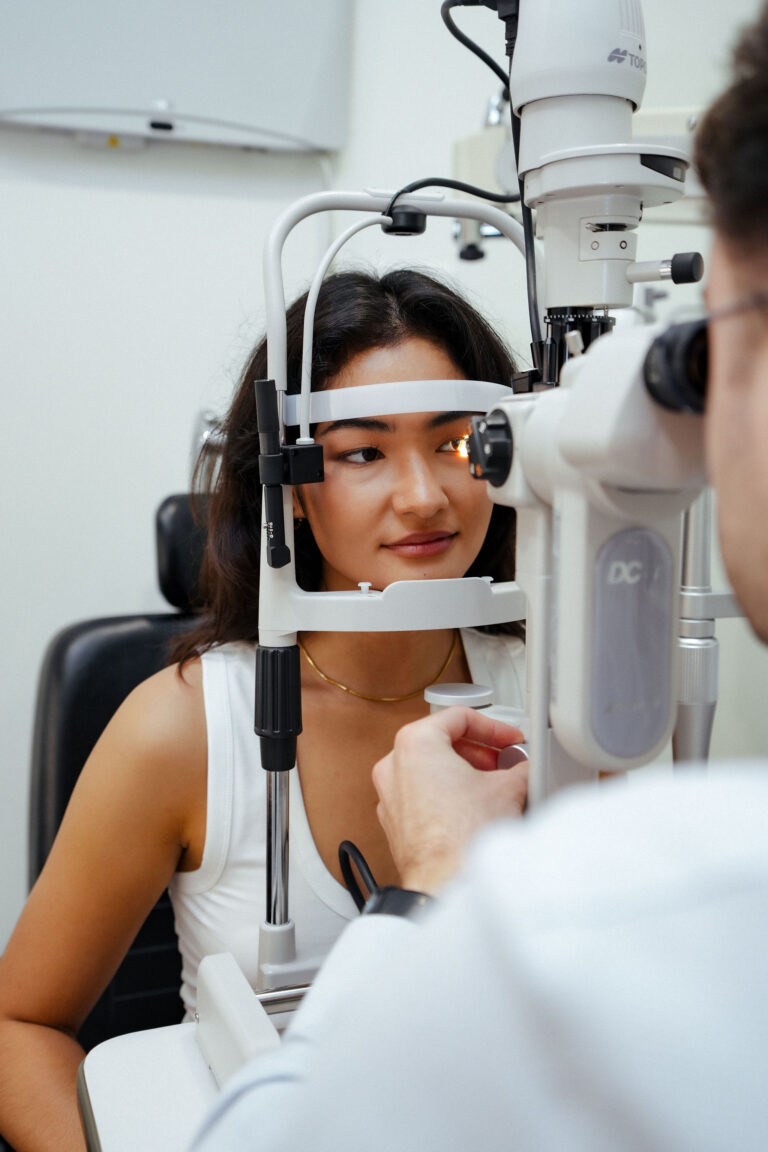
Our comprehensive eye examinations include retinal photography, slit lamp photography and/or macula scanning, depending on your individual clinical needs. A fee of $65 for Adults/$45 Children (under 18 years of age) applies for these services.
Additional fees apply for myopia management, corneal topography and axial length scans. These will be discussed with you during your consultation.
Please note that these fees are not covered by Medicare or Private Health Funds.
Our optometrists recommend a full eye examination every 12 to 18 months, or more frequently if monitoring specific eye conditions.
In some cases, we may need to dilate your pupils. This can cause temporary blurred vision — typically for 1 to 2 hours, and up to 4 hours for some patients. You may also experience increased light sensitivity during this time, so we recommend bringing sunglasses to your appointment. Dilation allows our optometrists to thoroughly examine the peripheral retina for signs of eye disease.
If you require any further information, please contact us on 3355 2553.
What To Bring To Your Appointment
Please bring the following items with you:
-
-
Current Glasses
-
Sunglasses
-
A list of your currently medications
-
Referral letter (if applicable)
-
Medicare Card
-
Private Health Fund Card (we can process claims via our HICAPS terminal)
-
If you wear contact lens, please bring your lens case.
-
Vision Correction Options
During your eye examination, our optometrists will discuss the most suitable vision correction options for you.
Options may include distance or reading glasses, computer lenses (extended readers), multifocal (graduated) lenses, transition lenses, prescription sunglasses, prescription safety glasses, or contact lenses.
We offer contact lenses in daily, fortnightly and monthly disposable options, as well as monovision and multifocal designs for patients who require both distance and near correction.
To help us recommend the best solution, we encourage you to consider your visual needs before your appointment. For example, knowing the distance from your eyes to your computer screen helps us select the most appropriate lenses for your workspace.